Expert Insights
2026 Kia K4 Road Test and Review
By Brady Holt
Recent Articles
Popular Makes
Body Types
2026 Ford Transit T-350 XLT ・ Photo by Brady Holt
Sometimes, a minivan doesn’t cut it. We love spacious, family-friendly rides like the Honda Odyssey and Chrysler Pacifica. They can fit up to eight people comfortably or swallow tons of cargo. But for maximum seating, cargo, and payload capacity, it’s time for a full-size van.
The 2026 Ford Transit is our favorite. More than a decade ago, it brought European-style space efficiency and driving manners to the long-neglected full-size van segment. With a high roof, remarkably easy visibility, and unexpectedly agile handling, the Transit is painlessly functional. Whether you’re looking to live the “van life” or choose the right vehicle for your work, the Transit is ready for you.
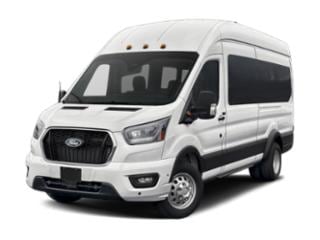
For this review, we spent a week testing a 12-passenger 2026 Ford Transit T-350 XLT AWD to learn about its pros and cons. Pricing for the 2026 Transit starts at $48,400 for a cargo van and $59,680 for a passenger van. With a host of mechanical, safety, and convenience upgrades, plus the mandatory $2,095 destination charge, our test vehicle came to $77,205.
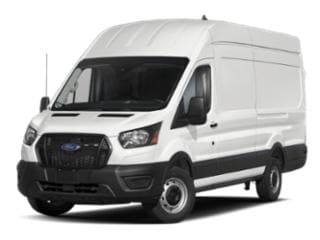
The Transit comes in a choice of three lengths, three roof heights, and a range of body styles – including both passenger van and cargo van, as well as cutaway and chassis-cab variants for someone who’d mount a third-party truck or bus body.
But whichever Transit you pick, this is a big and tall vehicle. The shortest Transit is 218 inches long, nearly as long as Ford’s largest SUV – the Expedition Max. The longest version is 264 inches long. The standard-height model is 82 inches tall, versus 78 inches for the Expedition Max. Or you can get up to 110 inches tall with the High Roof. Our test vehicle is the “medium” Transit in both length and height: 235 inches long and about 100 inches tall.
With our XLT model's shiny steel wheels, chrome-trimmed grille, and LED headlights, it’s dressed up more than a plumber’s Transit van with plastic hubcaps. But its big, rounded headlights aren’t built for style – even for a commercial van. The Mercedes-Benz Sprinter and Ram ProMaster have sleeker faces on their similarly shaped bodies. On the other hand, the Transit looks far more modern than its other competitor: the Chevrolet Express (and its GMC Savana twin), which hasn’t changed visually in a quarter of a century.
2026 Ford Transit T-350 XLT ・ Photo by Brady Holt
The Transit was also designed for functionality inside. The dashboard is carefully sculpted, but not for style. It's all about fitting all sizes of cupholders plus various other storage areas for small items. This year, Ford made one potentially appealing change: Every Transit now comes with a big 12-inch infotainment touchscreen. That lets you get a good look at your GPS map via Apple CarPlay or Android Auto, which both come standard as well via wireless connectivity. (Ford also swapped out the physical gauges for an 8-inch digital display.)
Our chief complaint about the touchscreen is that it absorbs the Transit’s climate controls, which occupy a tiny strip along the bottom of the screen. We miss being able to twist buttons and push knobs. You still at least get knobs for headlights and audio volume, as well as a simple array of buttons on the steering wheel.
The Transit’s interior is solidly built, and our test vehicle included the optional leather-wrapped steering wheel. But if you’re looking to make it into a high-end family ride, you’ll need to pay someone to wrap the cloth seats in leather. And there’s nothing to be done about the industrial-grade plastic trim. A Mercedes Sprinter, while still feeling like a work van, is a little fancier.
2026 Ford Transit T-350 XLT ・ Photo by Brady Holt
The Transit comes standard with just two seats and an open cargo hold behind them (we’ll talk about cargo soon). The driver and passenger have easy steps up into the towering seats, and the side windows dip down near your knees for an easy view out. Our test van included the optional heated and power-adjustable driver’s seat. Vinyl or cloth upholstery is available, but no leather – to luxe up your Transit’s seats, you’d need aftermarket support.
Our test vehicle was the 12-seat passenger van. It has a three-person bench seat in the second row, three seats in the third row (two together, one on the other side of an aisle), and four in the fourth row. A 15-passenger version is also available – it duplicates our van’s third row, then pushes the four-seat bench back to a fifth row. It’s easy to get in and out of the Transit, and the seats are surprisingly comfortable. Each of the 12 seating positions is shaped to hold someone’s body, rather than rows of flat slabs interrupted only by seatbelts. We also appreciated that the gauge cluster shows which of the 12 seatbelts are buckled, so you can quickly check on a child who’s sitting three rows away.
Unlike a minivan, the Transit has only a single sliding door (on the passenger’s side). Ford no longer sells a power-sliding door, but this year brought a soft-close feature like you’d find on a $100,000 luxury car: If you don’t slam the door hard enough, a motor silently finishes the job for you. You can’t remotely open the door to have it waiting for you, or make a grand entrance as the sliding door slowly reveals you in your gala outfit. But the Transit’s power door was painfully slow, getting in the way of more common van tasks.
2026 Ford Transit T-350 XLT ・ Photo by Brady Holt
Between the Transit’s different seating options, lengths, and heights, available cargo capacity varies a lot – up to a maximum of 487 cubic feet. That’s almost the exact capacity of four Ford Expedition Max full-size SUVs. A lot of that volume goes into the van’s mega height, but both Ford and third-party suppliers make shelves, drawers, and other storage solutions that let you stack your stuff high. Even the medium-roof van is tall enough for most adults to walk around in, while the high-roof van makes enough headroom for everyone else.
In our passenger van, we had 72.8 cubic feet of cargo space behind our fourth-row seat. That’s nearly as much as the Expedition Max with its third-row seat folded down – all while carrying 12 passengers instead of five. What the Transit doesn’t support is easy transitions between carrying passengers and cargo. The rear seats don’t fold down, and while they’re removable, they’re heavy and require tools. And the 15-passenger Transit fills the entire cargo hold with its last row of seats, so passengers will need to carry their belongings in their laps.
Depending on the engine and configuration, the Transit can tow up to 6,900 pounds – similar to the competition.
2026 Ford Transit T-350 XLT ・ Photo by Brady Holt
For years, we’ve heard some critics extol how well modern pickup trucks drive. “They’ve gotten so gentle and car-like!” But most remain bouncy, ponderous beasts compared with the Ford Transit. Its small steering wheel, direct and precise steering responses, and superb visibility make the Transit feel agile and easy to drive. The ride is gentle, too, and available all-wheel drive adds traction in slippery conditions. You shouldn’t push a Transit around a corner at a high speed, especially if you’ve loaded it up with equipment or packages up to the roof. But it drives better than it has a right to.
This year, Ford added new standard driver aids to all Transits, including front and rear parking sensors. Our test van also included adaptive cruise control, automatic lane-keeping steering assistance, blind-spot monitoring, a digital rearview camera mirror, and a surround-view parking camera.
The Transit is available with a choice of two 3.5-liter V6 gas engines, each paired with a smooth-shifting 10-speed automatic transmission. The base engine makes 275 horsepower and 262 lb-ft of torque, while the upgrade adds a turbocharger that boosts output to 310 hp and 400 lb-ft of torque. The base engine gets the job done, while the “EcoBoost” turbo is genuinely quick.
2026 Ford Transit T-350 XLT ・ Photo by Brady Holt
The Transit is big and, especially with the turbo, powerful. But it’s not economical. The EPA doesn’t rate such heavy vehicles, but our EcoBoost AWD test van averaged just 14 mpg during our weeklong test. And that was with only two to four people on board. Stop-and-go driving, like rush-hour traffic or parcel delivery, would guzzle even more gas. That’s why we love the Transit’s third powertrain: an electric motor.
This fully electric van, called the e-Transit, goes an estimated 143 to 159 miles between charges – depending on the roof height. When we tested a medium-roof model, we saw more like 200 miles, albeit without a load of cargo and during EV-friendly mild temperatures.
The e-Transit’s range may not be a good fit for a plumber who needs to hit five different homes in a day on different sides of a city, or a builder working on a property an hour down the freeway from headquarters. Then you’d likely have to stop at a DC fast-charging station, where you’d get from 10 percent to 80 percent charge in about half an hour. But with shorter drives and a place to charge up the e-Transit privately – via a 240-volt charging station at a home or workplace – it can slash running costs. It would cost roughly 8 cents per mile to keep the e-Transit charged at the average commercial electrical rate of 13.6 cents per kWh. Our test van, getting 14 mpg at $4 per gallon, cost 3.5 times that much.
The e-Transit cargo van starts at $53,260, and you can also buy chassis cab and cutaway versions. However, there’s no e-Transit passenger van – to the possible chagrin of daycare providers and hotels that offer shuttle rides to the nearby airport.
2024 Ford e-Transit ・ Photo by Brady Holt
The Transit faces three competitors in the full-size van market: the Mercedes-Benz Sprinter, the Ram ProMaster, and the Chevrolet Express/GMC Savana twins.
The Sprinter has more panache – it’s a Mercedes! – and a diesel engine that promises better gas mileage. But the humble Transit drives better and costs less, and the Sprinter’s interior isn’t consistently fancy.
The ProMaster is a space-efficient front-wheel-drive van (the Transit and Sprinter are rear-wheel drive) with a tight turning radius and competitive prices. It also has more physical controls than the touchscreen-focused Transit. But unlike the Ford, the Ram handles like you might expect a work van to – badly.
Finally, the Express and Savana are proven workhorses. Check it out if you wish Ford still sold a V8-powered Econoline instead of a European-style high-roof, space-efficient, sharp-driving van with an available turbo engine. The Ford crushes its General Motors counterparts for thoughtful design, advanced engineering, and modern amenities. The GM twins just keep chugging away, year after year. Now that the Transit has been around for more than a decade, though, it has also proved that it can run for a long time. You’re not rolling the dice on a novel experiment.
2021 Mercedes-Benz Sprinter 2500 ・ Photo by Brady Holt
With the 2026 Ford Transit, you look like you’re driving a house and feel like you’re driving a car. Ford has elevated the work van without overlooking the basics that commercial customers will count on.
Even when laden with all its optional creature comforts, the Transit doesn’t become a luxury car like a family-focused minivan or SUV. Aftermarket upgrades wouldn’t likely tackle the dashboard plastics. We don’t love the new touchscreen-only climate controls. And if you’re looking only at a spreadsheet and don’t care how the vans drive, the Ram ProMaster puts up a good fight.
But overall, the Transit is our favorite full-size van. Especially if you’ll personally drive the van you buy, the Transit is a winner.
2026 Ford Transit T-350 XLT ・ Photo by Brady Holt
Car of the Day
Resources
©2026 AutoWeb, Inc. All Rights Reserved.
Some content provided by and under copyright by Autodata, Inc. dba Chrome Data. © 1986-2026.