Car Comparison
2024 Subaru Solterra vs. 2024 Volkswagen ID.4
By Brady Holt
Recent Articles
Popular Makes
Body Types
2025 Toyota Crown Signia Limited ・ Photo by Brady Holt
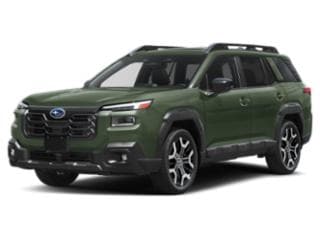
The Subaru Outback has long stood out for family-friendly qualities – comfort, safety, and value for the money. And it’s a favorite among environmentally conscious buyers. Yet this wagon-like crossover SUV has never offered a gas-electric hybrid powertrain for extra fuel savings.
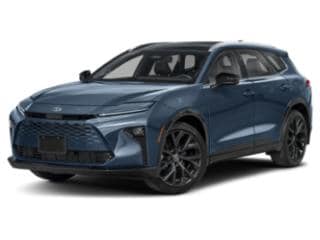
So along came Toyota. Last year, it introduced its own all-wheel-drive station wagon – sold exclusively as a hybrid. Toyota calls the Crown Signia a crossover, but you can think of it as Toyota’s Outback.
For this review, we’ve tested both the Crown Signia and the newly redesigned 2026 Outback to see how they compare in eight categories – then name our overall winner. We’ll also name some alternatives. Keep reading to see which one we chose and which modern AWD wagon is the best choice for you.
The 2026 Subaru Outback starts at $34,995 plus a mandatory $1,450 destination charge. That’s a jump from previous Outback generations. But it’s much less than the 2026 Toyota Crown Signia, which opens at $44,690 plus its own $1,450 destination charge.
That $10,000 difference buys more standard features: genuine leather instead of the Subaru’s leatherette, ventilated front seats, a heated steering wheel, heated rear seats, and a power-adjustable passenger’s seat. Getting that gear on the Outback means stepping up from the base Premium to the next-up Limited for $41,715. But even then, the Outback costs less – and it throws in a sunroof at that price. The exception is the Toyota's ventilated front seats, which Subaru saves for the $45,395 Touring model.
You can push both the Crown Signia and the Outback past $50,000 with all the options. But all along the way, the Outback costs less than a comparably equipped Crown Signia.
Winner: Subaru Outback
2026 Subaru Outback Wilderness ・ Photo by Brady Holt
The Outback spent most of its life as the station wagon variant of the Subaru Legacy sedan. But the Legacy has been discontinued, and Subaru used its freedom to make a taller, boxier, more SUV-esque Outback. The redesigned Outback still has familiar proportions: a longer, lower body than the typical SUV. But its blocky details now say “no way, not a wagon” – especially on our off-road-focused Outback Wilderness test vehicle, which has a higher ride height, a tougher-looking front end, and black trim instead of a lightbar between the taillights.
Subaru hopes this will broaden the Outback’s appeal, but it also threatens to alienate wagon-loving loyalists. To the latter, we’ll note that the new Outback still isn’t overwhelmingly big – like it can appear in pictures. It just has squarer corners.
Toyota also says the Crown Signia isn’t a wagon. But the styling doesn’t pretend as hard. It’s curved and graceful, rather than looking tough. And it has the small side windows of a luxury car rather than the Outback’s all-business squared-off glass. The slim-looking Crown Signia actually has a bigger footprint than the Outback – a couple inches longer and just as wide. The Subaru is about 3 inches taller, but that’s largely due to its higher ground clearance and bigger roof rack, not its body.
The winner comes down to your own personal tastes.
Winner: Tie
2025 Toyota Crown Signia Limited ・ Photo by Brady Holt
Inside, the Crown Signia is once again elegant and graceful where the Outback is more about simple functionality. Once again, your tastes may differ. And you might not love the bronze accents on our Wilderness test vehicle. But since both wagons are nicely finished, we’ll give the nod to the Outback for its simpler controls.
Our first impression of the new Outback’s interior is lots of screens. The 12.1-inch square at the center of the dashboard looks too big for its space, bulging up past the 12.3-inch digital gauge cluster. But unlike the old Outback and many other modern cars, Subaru provides lots of physical buttons and knobs. You don’t need the screen for climate controls, seat heaters, or radio adjustments. And we appreciated being able to split the screen into multiple side-by-side views.
The Crown Signia’s low, wide screen fits its dashboard more cleanly. And it also has simpler controls than most new cars. But Subaru did even better. And on the Toyota’s screen, you can only view one thing at a time – say, the GPS navigation system or radio information. Finally, the Crown Signia’s space-saving electronic gear selector has a learning curve, while the Outback’s traditional unit has tried-and-true simplicity.
We understand if you find the Crown Signia’s interior prettier than the Outback’s. But the Subaru is our pick.
Winner: Subaru Outback
2026 Subaru Outback Wilderness ・ Photo by Brady Holt
We mentioned how the Outback got taller and boxier in its new redesign. That’s not just for show. It also provides more interior space than the old Outback – or the Crown Signia. There’s more headroom in the front and back, along with more rear legroom. And there’s a lot more cargo room: 35 cubic feet behind the Outback's rear seat and 81 cubic feet with the rear seat folded down, compared with 25 cubic feet and 68 cubic feet, respectively, in the Crown Signia.
Also, thanks to its big roof racks, the Outback is better equipped to carry extra luggage on the roof. And it can tow up to 3,500 pounds (with the larger of its two engine options), a little better than the Crown Signia’s 2,700-pound limit.
The Crown Signia does have especially well-shaped front seats. And we appreciate how ventilated front seats come standard. But overall, the Outback wins.
Winner: Subaru Outback
2026 Subaru Outback Wilderness ・ Photo by Brady Holt
The Crown Signia is a pleasant car to drive, with a smooth and steady ride and decent handling. And between its four-cylinder gasoline engine and its two electric motors, it generates 240 horsepower – enough for peppy acceleration.
However, unlike the Toyota Crown sedan, the Crown Signia wagon lacks the company’s turbocharged 340-hp Hybrid Max powertrain. That gives it a knock against the Outback. While the Subaru comes standard with a modest 180-hp four-cylinder, you can upgrade to a healthy 260-hp turbo version. Every Crown Signia comes with the same base engine.
Also, both the Outback’s engines were quieter than the Crown Signia’s. And the Outback’s suspension was also extra-supple over bumps. Both cars drive well, and the Crown Signia is quicker than the base non-turbo Outback. But overall, we favor the Outback for its smoother ride and quieter engines.
Winner: Subaru Outback
2026 Subaru Outback Wilderness ・ Photo by Brady Holt
The Crown Signia comes standard with all-wheel drive, and its ground clearance is higher than the Crown sedan. But to tackle anything more challenging than an unpaved parking lot or some light snow, the Outback will do better.
The Toyota gets its AWD via a second electric motor that powers the rear wheels. Its gas engine and primary electric motor turn only the front wheels. So the Crown Signia can’t distribute power as effortlessly as the Outback, which has a mechanical link to the rear wheels. The Outback also has a higher ground clearance – 8.7 inches on most models, and 9.5 inches on the Wilderness like our test vehicle. The Crown Signia sits 6.7 inches off the ground.
Finally, the Outback is available with a selection of driving modes that optimize traction in different terrain conditions, along with a hill-descent control system. The Crown Signia has none of that.
Winner: Subaru Outback
2026 Subaru Outback Wilderness ・ Photo by Brady Holt
Now we come to the Crown Signia’s big, unambiguous victory: It sips gas.
The Outback is a decently economical wagon, to be clear. Its base engine gets 25 mpg in the city, 31 mpg on the highway, and 27 mpg combined in EPA testing. Its turbo engine gets 21 mpg city, 29 mpg highway, and 24 mpg combined. And the Wilderness model, sold only with the turbo, gets 21 mpg city, 27 mpg highway, and 23 mpg combined. We averaged 28 mpg with the base engine and 25 mpg with the turbo Wilderness.
The Crown Signia is in another league. Its electric motors do lots of the work at low speeds and in stop-and-go traffic, where a gas-only engine is the least efficient. The Toyota’s hybrid battery gets recharged when the engine runs and by recapturing energy from the brakes. The result: EPA estimates of 39 mpg city, 37 mpg highway, and 38 mpg combined. Our average was a bit less, at 36 mpg. But we measured that figure during the winter, and electric batteries don’t do well in the cold. Either way, the Crown Signia trounced even the base Outback’s gas mileage – despite being more powerful.
Winner: Toyota Crown Signia
2025 Toyota Crown Signia Limited ・ Photo by Brady Holt
The Toyota Crown Signia is a safe vehicle. It earned the top rating of Good in tough Insurance Institute for Highway Safety frontal and side-impact crash tests, as well as for automatic collision avoidance. It came up short only for protecting rear passengers in a frontal impact, earning a Marginal score. Last year’s Subaru Outback had the same issue, but the redesigned 2026 Outback earned Good in this test as well – giving it the highest IIHS Top Safety Pick+ status.
Both cars come with automatic emergency braking, blind-spot monitoring, and lane-keeping steering assistance. And both do well in a crash. But the 2026 Subaru Outback does better.
Winner: Subaru Outback
2026 Subaru Outback Wilderness ・ Photo by Brady Holt
We’d love a hybrid Subaru Outback. But the Toyota Crown Signia isn’t it. It’s a less roomy, more expensive, and less capable wagon.
We still like the Crown Signia. Its elegant design stands in contrast with the Brutalist new Outback, and its gas mileage is indeed excellent. And it’s still comfortable and decently roomy. But the Outback is the better overall package.
Winner: Subaru Outback
2026 Subaru Outback Wilderness ・ Photo by Brady Holt
When you’re looking for the qualities of a Subaru Outback but with better gas mileage, most alternatives are less wagon-like crossover SUVs. A host of roomy yet decently affordable crossovers with hybrid powertrains include the Honda CR-V, Hyundai Tucson and Santa Fe, Kia Sorento and Sportage, Mazda CX-50, and Toyota RAV4. If you like the Crown Signia’s luxury, we’d look first to the swanky Santa Fe and the less expensive CX-50, as well as the nicely finished and well-rounded CR-V.
Meanwhile, for a “hybrid Outback” vibe, you can consider the Subaru Forester Hybrid. It recently debuted a Toyota-based hybrid system – albeit with a mechanical link to its rear wheels. The Forester is a little smaller than the new Outback, and its previous-generation infotainment system is harder to use and doesn’t work as well. It’s expensive for what you get, too. But for a hybrid with the traditional Subaru virtues of rugged simplicity, off-road capability, comfort, and safety, it’s the top choice.
To cut out gas entirely, the new Subaru Trailseeker is a fully electric wagon that travels an EPA-estimated 274 miles per charge. If you can charge at home and don’t take frequent long trips, the Trailseeker can slice your fuel bills dramatically and cut gas stations out of your weekly routine. It also delivers extra-quick, near-silent acceleration. When you need to rely on public charging, though, an EV like the Trailseeker becomes more expensive and less convenient. The Trailseeker isn’t quite as roomy as the new Outback, either, and it has a higher sticker price.
2025 Hyundai Santa Fe Hybrid Calligraphy ・ Photo by Brady Holt
Car of the Day
Resources
©2026 AutoWeb, Inc. All Rights Reserved.
Some content provided by and under copyright by Autodata, Inc. dba Chrome Data. © 1986-2026.