
Car Comparison
2024 Subaru Solterra vs. 2024 Volkswagen ID.4
By Brady Holt
Recent Articles
Popular Makes
Body Types
2025 Volvo EX30 Ultra ・ Photo by Brady Holt
The Volvo EX30 was going to take the world by storm. Attractive, high-quality, and fun to drive, yet reasonably priced for an electric car, this subcompact crossover promised to be a best-seller. In America, that never worked out, and the EX30 is getting discontinued here after just two model years. After sudden changes to tariffs and federal incentives, it never hit Volvo's $35,000 price target. And production delays gave time for appealing competitors to hit the market as well.
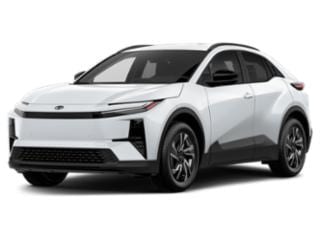
One unexpected rival is the all-new 2026 Toyota C-HR. The C-HR used to be a funky-looking economy car with a painfully slow gas engine. Now it’s a sleek, powerful all-electric crossover that slots into the EX30’s niche – it prioritizes a high-end feel and blazingly quick acceleration over maximum value, spaciousness, and range per charge.
Now, though Volvo has announced that it will stop production of the U.S.-bound EX30 this summer, months of supply will remain available. Should you grab an EX30 while you still can, or is the new C-HR the better choice anyway? In this review, we’ll discuss how each sporty EV crossover compares in each of six categories, then name our overall winner. Finally, we’ll discuss some other alternative electric crossovers that you might find more appealing than either of these two models.
The 2026 Volvo EX30 starts at $38,950 (plus a $1,395 destination charge). That’s less than $44,900 you had to spend last year – thanks to a new base model with rear-wheel drive and a single electric motor. But it’s more than the C-HR, which opens at $37,000 (plus a $1,595 destination charge).
Volvo does have some additional luxury features at this price. Even the base EX30 Plus has a premium Harman Kardon stereo, a panoramic moonroof, GPS navigation, and full leatherette seating (or the option of beautiful wool upholstery). These aren’t available on the base C-HR SE. But the C-HR does come standard with a powerful dual-motor all-wheel drive powertrain – a $6,000 upcharge on the EX30. Our uplevel C-HR XSE test vehicle matched the EX30 Plus’s features for $41,979, and with AWD, a surround-view parking camera, and heated rear seats thrown into the bargain. Meanwhile, the EX30 Ultra model, like our test vehicle, has a few exclusive features like automatic self-parking. But our test car cost $47,100.
Overall, the EX30 can be the better deal if you’re interested in luxury features without AWD. Otherwise, the C-HR has the lower sticker price. If price is a leading factor, we do encourage you to get dealer price quotes on both vehicles; electric cars often sell at a steep discount from their sticker prices.
Winner: Toyota C-HR
2026 Toyota C-HR XSE ・ Photo by Brady Holt
The 2026 Toyota C-HR SE goes an EPA-estimated 287 miles per charge with its standard AWD and 18-inch wheels. The C-HR XSE like our test car has bigger 20-inch wheels that drop its range to 273 miles. We beat that range estimate, traveling 208 miles while using 69 percent of the battery capacity – working out to 301 miles of range on a full charge. (The C-HR’s trip computer projected that we’d make it only 265 miles; we’ve found Toyota EVs to be consistently conservative in their range estimates.)
The C-HR’s range isn’t amazing for a $40,000 EV. But it beats the EX30. The base rear-drive single-motor model goes an EPA-estimated 261 miles per charge, while the dual-motor AWD version like our test car drops to 253 miles. Unlike the Toyota, our Volvo missed its range estimate – we were on track to hit just 245 miles on a full charge, needing 92 percent of a charge to go 226 miles. And the off-road-themed EX30 Cross Country goes just 203 miles to 227 miles per charge, depending on the wheel size – among the shortest ranges of any EV sold in the U.S. today.
The C-HR wins the range battle in two ways. First, it’s slightly more efficient than the EX30 – getting the energy equivalent of 117 mpg with 18-inch wheels and 112 MPGe with 20-inch wheels. The EX30 gets 116 MPGe with rear-wheel drive and 109 MPGe with AWD, and the Cross Country dips to 89 MPGe to 99 MPGe. The bigger difference: Toyota gives you a bigger battery.
The latter point means that the C-HR takes a little longer to charge. Expect to need 30 minutes to go from 10 percent to 80 percent charge at a DC fast-charging station, compared with 24 minutes in the Volvo. But those extra six minutes also get you additional range, so that evens out. The C-HR has a Tesla-style NACS charging port, while the EX30 has an older-style CCS port. Both EVs can use other charging stations via adapters, though.
Winner: Toyota C-HR
2026 Toyota C-HR XSE ・ Photo by Brady Holt
The redesigned 2026 Toyota C-HR is the brand’s smallest EV – a smaller, sportier-looking version of the stronger-selling Toyota bZ. You’ll find a chunky lower body with a sleek, coupe-like roofline on top. Slim LED lights decorate the front and rear.
The C-HR stretches 178 inches long. That isn’t huge, but it’s nearly a foot longer than the wee Volvo EX30 – one of the smallest cars sold in the U.S. It’s boxy yet endearing. The lack of a front grille makes it clear that it’s an EV, while the Volvo badge keeps the front end from looking too plain. This area is blacked out on the off-road-themed Cross Country model. Like the C-HR, the EX30 is not very tall. So either way, it comes across more like a hatchback than a true SUV.
The EX30 we tested last year wore a cheerful Moss Yellow paint job. Sadly, this year has only a selection of muted black, white, gray, and beige exterior colors. Our C-HR test vehicle came in a bright Tandoori orange paired with an extra-cost black roof.
We’ll call the exterior design category a tie between the EX30 and C-HR. You’ll decide between the taller, stubbier Volvo and the longer, sleeker Toyota – and you’ll decide if you’re attached to a bright color.
Winner: Tie
2025 Volvo EX30 Ultra ・ Photo by Brady Holt
Inside, the C-HR shares its dashboard with larger Toyota EVs. This is a chunky dash with a big 14-inch touchscreen sticking out at the center and a small 7-inch digital gauge cluster tucked off to the side. With twin wireless smartphone chargers and a collection of physical buttons and knobs, this is a functional interior – if not a slickly modern digital experience. And while the cabin is nicely finished and we appreciated a neat texture on the upper dashboard, the C-HR doesn’t feel as fancy as the Volvo.
The EX30 is a thing of beauty inside. Its simple aesthetic feels clean and refreshing more than drab and austere. Clever touches include slim vertical climate vents that hug the central touchscreen and sides of the dashboard, along with interior door handles that emerge organically from a strip of trim. There are no buttons or knobs on the dashboard, and no speedometer display sits behind the steering wheel – just a single central 12.3-inch touchscreen.
But as much as we liked looking at the Volvo’s interior, we hated using it. Its screen is too small for all the functions crammed into it. If you want to check your speed, remaining driving range, or clock, you’re hunting down small type amid a cluttered display. And if you actually want to do something, you’re tapping carefully at little icons to summon menus.
And that’s when it works. Our test car was also glitchy. The climate system occasionally set itself to display Celsius temperatures. Worse, the car also stopped recognizing its keys and had to be towed to a Volvo dealer for a battery reset. The C-HR might not be flashy or fancy, but it’s at least passably modern and richly finished. The EX30’s controls are not passably functional, even on a good day.
Winner: Toyota C-HR
2026 Toyota C-HR XSE ・ Photo by Brady Holt
Not surprisingly, the bigger C-HR also has more room than the EX30. The driver and front passenger get plenty of space on uncommonly comfortable seats. But unless the front seats move well forward, rear passengers have their knees pressed into the seatbacks. For cargo, Volvo quotes just 14.1 cubic feet of cargo space behind the rear seat, which would be less than you’d find behind the third row of a Volvo XC90. In the real world, the EX30 has an advantage – there’s more space to spread your stuff on the floor, even if you can’t stack as high to the ceiling. But this is a modest space. The rear seat folds down, but you need to remove the head restraints or they’ll smack against the front seatbacks. Volvo quotes a modest total cargo capacity of 32 cubic feet with the rear seat folded.
The C-HR is also the most comfortable for the front seats. The cushions aren’t as amazing as the EX30’s, but they’re still quite nice. And since the C-HR is a shorter version of a bigger car, the driver and front passenger can enjoy wider seats and more space between them. And while the rear seat doesn’t have much legroom, the cushion is comfortable – and it’s still more spacious than the EX30’s. Meanwhile, for cargo, the C-HR fits 25.3 cubic feet behind its rear seat and 59.5 cubic feet with its rear seat folded.
For cabin storage, Toyota made the curious choice to sell the C-HR with no glovebox. But Volvo isn’t much better, with only a small central storage bin. (You have to open it using – you guessed it – the touchscreen.)
Winner: Toyota C-HR
2026 Toyota C-HR XSE ・ Photo by Brady Holt
We mentioned that every 2026 Toyota C-HR is sold with all-wheel drive via two electric motors. They have a combined output of 338 horsepower, good for a 4.9-second sprint to 60 mph. We’re left wondering why Toyota didn’t make a cheaper, slower version of the C-HR – or prioritize range over speed. But if you’re looking for a relatively affordable rocket, it’s a winner. The C-HR also has an extra-comfortable ride for a small EV, and it’s reasonably agile as well.
Still, the EX30 is both quick and more fun to drive. Even its 268-hp rear-drive model barely trails the dual-motor Toyota, racing to 60 mph in an estimated 5.1 seconds. And AWD brings 422 hp; floor the accelerator and this little car scrabbles for traction and rockets itself forward at an incredible speed. 60 mph arrives in just 3.4 seconds.
The EX30 is smaller and lighter than the C-HR, and you feel that as it dives more eagerly through gaps in city traffic. Also, when you root through the touchscreen, you can adjust its steering firmness – requesting more resistance when you’re hustling around corners or less if you’d like to take things easy. And the EX30 is steady and composed on smooth roads, and it’s quieter than the C-HR, though the Volvo’s suspension felt stiff over bumps.
Overall, we’ll award this category to the ultra-quick, agile EX30. But if you care more about a gentle ride than maximum grins, you might favor the C-HR.
Winner: Volvo EX30
2025 Volvo EX30 Ultra ・ Photo by Brady Holt
If you’re looking for a small EV with super-quick acceleration and lots of personality, the Toyota C-HR picks up where the discontinued Volvo EX30 is leaving off. It’s more functional than the Volvo – it has more room, much simpler controls, and (in our experience) fewer glitches. And it costs less.
The EX30 is more luxurious, it’s even faster, and it’s more fun to drive. But as much as we enjoyed looking at our little yellow Volvo, and as much as we enjoyed driving it, it occupies a smaller niche – the city-sized luxury performance EV. And even if that’s exactly what you’re looking for, you still have to contend with the overcrowded screen.
Winner: Toyota C-HR
2026 Toyota C-HR XSE ・ Photo by Brady Holt
The Toyota C-HR beat the Volvo EX30 in our comparison. But you can also consider other EVs – including the C-HR’s many platform mates.
First of all, Subaru sells a nearly identical model called the Uncharted. The two cars share a body and dashboard design, with the biggest visual differences being the headlights and the steering wheel. The Uncharted is also available with front-wheel drive – it costs less and goes farther on a charge, but it’s less powerful and less all-weather capable. If you’re attached to the C-HR, you can also see if your Subaru dealer is able to cut you a better deal.
We’d also shop the C-HR against a fellow Toyota – the larger bZ. For just a couple thousand dollars more, the bZ delivers a much bigger backseat and cargo hold. Like the Uncharted, the bZ offers a choice of front- and all-wheel drive. A front-drive bZ actually costs less than the AWD-only C-HR, meaning that Toyota’s smallest EV (the C-HR) isn’t its cheapest. And we didn’t find the C-HR’s sportier styling to meaningfully change how it drives compared with the bZ.
Now, if you were more interested in the EX30 than the C-HR, our top alternative is the Mini Countryman EV – the electric version of Mini’s crossover SUV. This BMW-based model has the charm, zippy handling, high-end ambiance, and modern digital graphics that the C-HR lacks. And it’s roomier than either the EX30 or the C-HR. The biggest downside: The Countryman is one of the few EVs in the U.S. with less range than the EX30, at just 212 miles in EPA testing. The Countryman also isn’t as lightning-fast as the EX30, needing 5.4 seconds to reach 60 mph. And its sticker price is a little higher, depending on the options that interest you.
2026 Subaru Uncharted Sport ・ Photo by Brady Holt
Car of the Day
Resources
©2026 AutoWeb, Inc. All Rights Reserved.
Some content provided by and under copyright by Autodata, Inc. dba Chrome Data. © 1986-2026.