Car Comparison
2024 Subaru Solterra vs. 2024 Volkswagen ID.4
By Brady Holt
Recent Articles
Popular Makes
Body Types
2026 Toyota bZ XLE Plus ・ Photo by Brady Holt
The 2023 Toyota bZ4X was not a hit. Plenty of folks were interested in the idea of a Toyota electric vehicle. But this one lacked the range and charging speed of a good EV, without a cost advantage over superior competitors. It lacked the sensible interior ergonomics and simple exterior design of a good Toyota. And its name was an awkward mouthful.
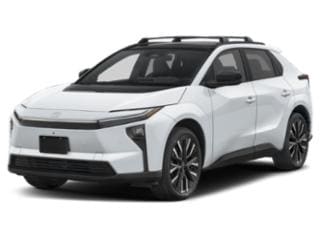
The 2026 Toyota bZ makes progress on all those fronts. This compact crossover SUV goes farther and recharges faster. It costs less. Its redesigned dashboard is easier to use. And its name got simpler. But with the competition also advancing rapidly since 2023, the question is, were the changes enough?
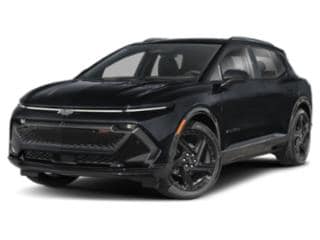
We recently spent a week testing the heavily updated 2026 bZ. In this review, we’ll compare it against one of its most popular value-focused rivals: the 2026 Chevrolet Equinox EV. Keep reading as we discuss how the bZ and Equinox EV compare in each of eight categories, then name our overall winner. Finally, we’ll discuss how these two EVs compare with other key electric crossovers.
The Equinox EV stormed into the EV market by promising to undercut most competitors. At the time, federal tax credits (no longer available) could take $7,500 off an EV’s price, letting it cost less than a gas-powered Equinox SUV. Today, the 2026 Equinox EV starts at $34,995 (plus a mandatory $1,800 destination charge).
The 2023 Toyota bZ4X started at $42,000. But the 2026 bZ matches the Equinox EV at $34,900 (plus a $1,450 destination charge). And it even comes with standard features that cost extra on the Chevrolet, such as heating for the front seats and steering wheel; a power-adjustable driver’s seat; a power liftgate; and a wireless smartphone charger. It also includes a couple features you can’t get on any Equinox EV – the ability to use your smartphone as a key, plus a second wireless charger.
Still, we’ll call this category an overall tie. That’s because the base Equinox EV comes with a full-size battery, while Toyota charges an extra $3,000 if you want range that matches the Chevy. In another long-term perk, the bZ includes just three years of access to its factory navigation system before charging a subscription fee; the Equinox EV includes eight years. Your winner will depend on the features and battery size you’d choose.
Winner: Tie
2026 Chevrolet Equinox EV LT 2 ・ Photo by Brady Holt
The 2026 bZ surged past its predecessor to get up to 314 miles of range in EPA testing with front-wheel drive. That’s for the front-wheel-drive XLE Plus model like our test vehicle. The base XLE with the smaller battery can go 236 miles on a charge, similar to the longest range in last year’s bZ4X. The front-drive Limited, with slightly bigger wheels cutting into its range, goes 299 miles on a charge. All-wheel drive makes the bZ more powerful but also cuts into its range: 288 miles on the XLE Plus and 278 miles on the Limited.
While the Toyota’s range is competitive for the class, the Equinox EV is even better. It can go 319 miles with front-wheel drive and 307 miles with all-wheel drive, dropping to 288 miles with its biggest wheels. We did comfortably beat the EPA’s range estimate in our tested bZ while falling short in the Equinox EV, but that’s at least in large part due to the weather – we tested the Equinox EV in winter and the bZ in spring. Electric vehicles perform best in moderate temperatures.
Both the bZ and the Equinox EV take about 30 minutes to recharge from 20 percent to 80 percent using a DC fast charger. And both can recharge overnight using a 240-volt car charger, like you could install in your garage. The updated bZ has a Tesla-style NACS charging port, while the Equinox EV has an older CCS-style; each can charge at either type of charging station via an adapter.
Overall, we’ll give the Chevrolet the win in this category for its longer range in the EPA’s standardized testing.
Winner: Chevrolet Equinox EV
2026 Chevrolet Equinox EV LT 2 ・ Photo by Brady Holt
The Equinox EV has a bigger battery than the bZ, helping it go farther on a charge. But the bZ’s smaller battery is more energy-efficient, reducing your charging expenses.
All electric vehicles are more efficient than gas-powered cars. The Equinox EV gets the energy equivalent of 117 mpg in the city, 100 mpg on the highway, and 108 mpg combined. The AWD models get about 5 to 13 MPGe less, depending on the wheel size.
But the bZ is one of the most efficient EVs on the market. It trails only the Lucid Air luxury sedan and certain variants of the Tesla Model 3 and Model Y. The EPA projects that the XLE Plus front-wheel-drive like our test vehicle gets 143 MPGe city, 119 MPGe highway, and 131 MPGe combined – more than 10 percent better than the Equinox EV. The XLE with the smaller battery gets nearly identical numbers. With AWD, the bZ XLE Plus gets 131 MPGe city, 109 MPGe highway, and 120 MPGe. The Limited trim level is about 3 to 5 MPGe less than the XLE Plus.
It typically costs very little to charge an EV at home, so the bZ’s efficiency advantage pays off slowly. But if you regularly use a public charging station, it’s a slightly bigger difference. The Equinox EV has an 85-kilowatt-hour battery, while the bZ has a choice of 58-kWh and 75-kWh batteries. Say you add 60 percent of charge to each battery at a DC fast charger at 50 cents per kWh. You’d pay $25.50 in the Chevrolet versus $22.50 in the Toyota – a $3 difference per approximately 180 miles of driving. Both cars are cheap to operate, but the bZ comes out ahead.
Winner: Toyota bZ
2026 Toyota bZ XLE Plus ・ Photo by Brady Holt
The Equinox EV shares its name with a gas-powered Chevrolet Equinox SUV – but only its name. The Equinox EV is a lower, sleeker, and more futuristic vehicle. An aerodynamic body boosts its range and efficiency. Front and rear lightbars keep it looking modern and slick. And the grille-free front end could only belong to an EV, since a gas engine would need airflow for cooling. But the Equinox EV’s silhouette is more upright than many similarly sized electric vehicles.
The bZ is more hatchback-like, with a more slanted rear end. Toyota also revised the styling this year, swapping out blacked-out fenders and creating a simpler front end inspired by the acclaimed latest-generation Toyota Prius. It looks less like an ordinary SUV than the Equinox EV, but we think most folks would agree that the bZ looks a lot better than last year’s bZ4X. We’ll name this category a tie for folks to choose their own preferences.
Winner: Tie
2026 Chevrolet Equinox EV LT 2 ・ Photo by Brady Holt
Inside, the Equinox EV and the bZ each have their own pros and cons.
The Equinox EV makes a big impression with its bigger digital gauge cluster, bigger central touchscreen, and superior graphics and customizability on both screens. And the dashboard is sleeker than the bZ’s, even though the bZ oddly doesn’t include a glovebox or as many physical controls. The bZ also has an unusual steering wheel, and you see the small gauge cluster above the wheel rather than through it. Still, we’re going to award this category to the Toyota.
First, the bZ’s interior materials are higher-quality than the Equinox EV’s. Second, its touchscreen supports Apple CarPlay and Android Auto; the Chevrolet locks you out of those popular phone-mirroring systems in favor of its built-in Google-based infotainment. Third, aside from the glovebox, we preferred the bZ’s cabin storage – like its twin smartphone chargers and bigger console bin. Finally, the Equinox EV complicates many simple tasks. The retractable exterior door handles try to guess when to pop out for you, and the car tries to guess when you’d like it to switch on and off. Neither guesswork was reliably correct. The windshield wipers and headlights are cumbersome, too. The bz has simple mechanical door handles, a push-button starter, and extra-easy headlight and wiper controls.
We can see why someone might prefer the higher-tech and subjectively prettier Chevy interior. But our overall nod goes to the Toyota.
Winner: Toyota bZ
2026 Toyota bZ XLE Plus ・ Photo by Brady Holt
We also found the bZ a little more comfortable than the Equinox EV. Both these crossovers are spacious, comfortable five-seat SUVs. But the Toyota’s front seats are better shaped and better padded than the comparatively hard, flat Chevrolet’s. And as we mentioned, the bZ comes standard with amenities that cost extra on the Equinox EV: heated front seats, a heated steering wheel, and a power driver’s seat. We preferred the Equinox EV’s rear seat, since the bZ has less foot space under its front seats. But both crossovers are fine for adults in the back.
Although the Equinox EV has a boxier body than the bZ, the Toyota has a little more cargo room: 27.6 cubic feet behind the rear seat versus the Chevrolet’s 26.4 cubic feet. Both have about 57 cubic feet with the rear seat folded. Only the Equinox EV is rated to tow a trailer, albeit a modest 1,500-pound one. A larger version of the bZ called the bZ Woodland can tow 3,500 pounds, but the standard bZ can’t tow at all. But we’ll give another narrow victory to the bZ for its more comfortable front seating.
Winner: Toyota bZ
2026 Toyota bZ XLE Plus ・ Photo by Brady Holt
The old bZ4X was a comfortable, mild-mannered EV. It had a smooth ride, effortless steering, and quiet but unexciting acceleration by EVs’ standards. The 2026 bZ keeps the gentle ride but adds more speed. Most models make 221 horsepower with front-wheel drive and a mighty 338 hp with AWD (the base XLE with the smaller battery has just 168 hp). Except to zip to 60 mph in just 4.9 seconds with AWD, about 7 seconds with front-wheel drive, and about 8 seconds with the base battery. This output is enough to spin the bZ’s tires with front-wheel drive, so we’d recommend AWD for someone who enjoys zipping forward at great speed.
The Equinox EV drives more like the old bZ4X. It’s comfortable and pleasant, but not as speedy. Expect about 8 seconds to 60 mph with front-wheel drive and 6 seconds with AWD. We found the bZ’s ride a little more comfortable, too, but that’s in part because our tested bZ had smaller wheels with thicker sidewalls.
Winner: Toyota bZ
2026 Toyota bZ XLE Plus ・ Photo by Brady Holt
The bZ and Equinox EV come packed with standard safety and driver-assistance features: adaptive cruise control, lane-keeping steering assistance, blind-spot monitoring, and both forward and reverse automatic emergency braking. Both crossovers have an optional surround-view camera, too.
Two factors tip the scales to the Equinox EV. First, while the two SUVs haven’t gone through the same crash tests, the Equinox earned top scores in its tests (five out of five stars from the National Highway Traffic Safety Administration) while the bZ came up short in some tests from the Insurance Institute for Highway Safety. The bZ still performed pretty well, but shy of the top mark.
Secondly, the Equinox EV is available with General Motors’ Super Cruise hands-free driving system. Super Cruise can handle acceleration, braking, steering, and even automatic lane changes on most controlled-access highways in America. Toyota’s equivalent system isn’t nearly as capable.
Winner: Chevrolet Equinox EV
2026 Chevrolet Equinox EV LT 2 ・ Photo by Brady Holt
With a longer range, a higher-tech interior, and the hands-free Super Cruise system, the 2026 Chevrolet Equinox EV is a more dazzling electric car than the 2026 Toyota bZ. But to us, the Toyota chips away at this lead to take the victory.
The bZ isn’t trying to do the latest cool things, hatchback shape and wacky gauge cluster aside. It’s quiet, comfortable, well-built, and efficient transportation – with an extra dose of speed, too. You don’t have to fuss with this car to use it, like you sometimes do in the Equinox EV. It’s easy to get inside, easy to start, and easy to sync with your smartphone.
The bZ’s plain infotainment system, lack of hands-free driving, less comfortable back seat, and smaller base-model battery might send you to an Equinox EV. And setting aside its subtle differences with the bZ, even the Equinox EV is a pretty easy electric car to live with. But this year’s upgrades to the Toyota’s battery, electric motors, interior and exterior styling, and price tag transform it into a force to be reckoned with in the EV segment – and it’s our winner.
Winner: Toyota bZ
2026 Toyota bZ XLE Plus ・ Photo by Brady Holt
The bZ and Equinox EV face a number of key rivals in the electric compact crossover class. Two key models recently left the U.S. market – the Nissan Ariya and Volkswagen ID.4. But plenty of alternatives remain.
We’ll start with the biggest name in EVs: the Tesla Model Y. It has an even longer range and great efficiency, along with a roomier interior and a self-driving tool that (although you have to keep your hands on the wheel) isn’t limited to highways. It costs several thousand dollars more than the Chevy or Toyota, though, and its controls have a steep learning curve.
Two other top rivals are the Hyundai Ioniq 5 and Ford Mustang Mach-E. The Hyundai has extra-fast DC charging, and both the Ford and the Hyundai are more fun to drive than the bZ or the Equinox EV. They can’t go as far on a charge, though, and they tend to have fewer features for the money unless you find a big discount.
If you’re interested in an AWD bZ, you can shop it against the Subaru Solterra. Toyota and Subaru co-developed the cars, which are nearly identical except for a few styling details. But there isn’t a front-wheel-drive version of the Solterra.
We also mentioned the bZ Woodland, which is a variant of the bZ with more cargo and towing capacity. It’s sold only with AWD and with lots of standard luxury features, starting at $45,300. And the Subaru Trailseeker is a twin to the bZ Woodland.
2024 Ford Mustang Mach-E Premium ・ Photo by Brady Holt
Car of the Day
Resources
©2026 AutoWeb, Inc. All Rights Reserved.
Some content provided by and under copyright by Autodata, Inc. dba Chrome Data. © 1986-2026.